How to Make a Small Living Room Look Bigger
How to Make a Small Living Room Look Bigger 12 Smart Ideas That Work
A small living room can feel cozy, inviting, and stylish—but sometimes it can also feel like the walls are slowly moving closer. If your sofa takes up most of the floor or your coffee table seems to be permanently in the way, you’re not alone.
The good news? You don’t need to knock down walls or move into a bigger house. With the right colors, furniture, lighting, and layout, you can make a small living room look bigger, brighter, and more open.
Think of your room like a photograph. The right composition can make the same space appear completely different. So, let’s explore some simple tricks that can create that spacious feeling without a major renovation.
1. Choose Light and Neutral Colors
One of the easiest ways to make a small living room look bigger is to use light colors.
White, cream, soft beige, light gray, pale blue, and other gentle shades reflect natural light instead of absorbing it. As a result, the room feels brighter and more open.
You don’t have to make everything pure white, either. A warm neutral palette can create a comfortable atmosphere while still giving the impression of more space.
Try using similar shades on:
- Walls
- Curtains
- Rugs
- Sofas
- Decorative accessories
When the colors flow together, the room feels less visually divided. It’s similar to removing unnecessary lines from a drawing—the eye can move around more freely.
2. Let Natural Light Do the Work
Natural light is one of the best free decorating tools you have.
If your windows are covered by heavy curtains, you may be making the room feel darker and smaller than it actually is. Instead, choose lightweight curtains in a soft color.
Hang curtains slightly above the window frame and let them extend toward the floor. This simple trick can make your windows appear taller, which can make the entire room feel more spacious.
During the day, keep curtains open whenever possible. If privacy is important, consider sheer curtains that allow sunlight to pass through.
3. Pick Furniture That Fits the Room
Bigger isn’t always better when it comes to furniture.
A huge sectional sofa may look luxurious in a showroom, but in a compact living room, it can quickly dominate the entire space. Instead, choose furniture that matches the scale of your room.
Look for:
- Slim sofas
- Compact armchairs
- Narrow side tables
- Small coffee tables
- Furniture with raised legs
Furniture with visible legs is especially useful because you can see more of the floor underneath it. That extra visual space creates an airy feeling.
Before buying anything, measure the room. A few minutes with a measuring tape can save you from an expensive decorating mistake.
4. Use Mirrors to Create the Illusion of Space
Mirrors are classic for a reason.
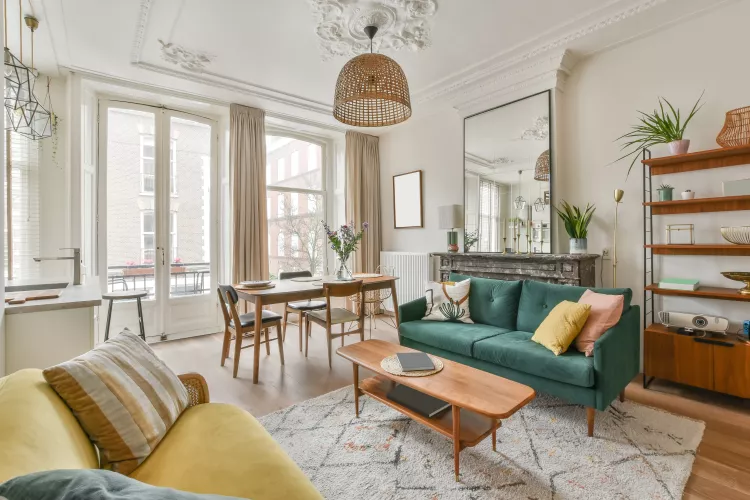
A strategically placed mirror can reflect light and create the illusion that your living room continues beyond the wall. In some cases, it can make a small space feel dramatically more open.
Try placing a large mirror opposite a window. It can reflect natural light throughout the room while visually doubling the amount of space.
You can also experiment with:
- Large rectangular mirrors
- Round decorative mirrors
- Mirrored furniture
- A collection of smaller mirrors
Just avoid covering every wall with mirrors. One well-positioned mirror can have more impact than several randomly placed ones.
5. Keep the Floor as Visible as Possible
When you’re working with a small room, every visible inch matters.
Too many floor-standing objects can make the space feel crowded. Instead, choose furniture that leaves some breathing room underneath.
For example, a sofa with exposed legs often feels lighter than one that reaches all the way to the floor.
You can also use wall-mounted shelves instead of bulky storage cabinets. This keeps belongings organized without taking up valuable floor space.
Remember, your goal isn’t necessarily to have less furniture. It’s to create more visual breathing room.
6. Use a Large Rug Instead of a Tiny One
This might sound surprising, but a larger rug can actually make a small living room appear bigger.
A tiny rug floating in the center of the room can visually break the floor into separate sections. A properly sized rug, however, helps connect the furniture and creates one cohesive zone.
Ideally, at least the front legs of your sofa and chairs should sit on the rug.
Choose a rug with a simple pattern or light color if your room is already busy. Too many bold patterns can make the space feel visually crowded.
7. Choose Furniture With Multiple Purposes
Small rooms benefit enormously from multifunctional furniture.
Why use one piece of furniture for one job when it can do two?
For example, consider an ottoman that works as both seating and storage. A coffee table with drawers can hide everyday clutter. A compact sofa bed can transform the living room into a guest space when needed.
Other useful choices include:
- Storage benches
- Nesting tables
- Folding furniture
- Wall-mounted desks
- Ottomans with hidden storage
Multifunctional furniture helps you maintain a clean room without sacrificing comfort.
8. Declutter Without Making the Room Boring
Clutter is one of the fastest ways to make a small living room feel even smaller.
Look around your room. Do you really need every decorative object currently sitting on the shelves?
Probably not.
Keep your favorite pieces and remove unnecessary items. Instead of displaying ten small decorations, consider choosing two or three larger pieces that have more visual impact.
Use baskets, cabinets, and hidden storage to keep everyday items out of sight.
A simple rule works well: if something doesn’t serve a purpose or make you happy, consider removing it.
9. Take Advantage of Vertical Space
When floor space is limited, look upward.
Vertical decorating draws the eye toward the ceiling and can make the room feel taller. Tall bookshelves, vertical artwork, floor-to-ceiling curtains, and high-mounted shelving can all help.
You can also arrange artwork vertically rather than spreading everything horizontally across the walls.
This technique works because it changes the direction in which the eye travels. Instead of focusing only on the limited floor area, your attention moves upward.
10. Improve the Lighting
Good lighting can completely transform a small living room.
A single ceiling light often creates flat, uninspiring illumination. Instead, combine several sources of light.
Try using:
- Floor lamps
- Table lamps
- Wall sconces
- Recessed lighting
- Small accent lights
Place lights at different heights to create depth.
Warm lighting can make the room feel comfortable and welcoming, while brighter ambient lighting can make it feel more open during the day.
If possible, maximize natural light first and use artificial lighting to fill darker corners.
11. Don’t Push Every Piece of Furniture Against the Wall
It may seem logical to push furniture against the walls to create more floor space. However, this isn’t always the best solution.
Sometimes leaving a small amount of breathing room between furniture and walls creates a more intentional and sophisticated layout.
The key is creating clear pathways. You should be able to walk through the room comfortably without bumping into tables or chairs.
Arrange furniture around a central focal point, such as a television, fireplace, artwork, or coffee table.
A well-planned layout can make even a compact room feel surprisingly functional.
12. Keep Patterns and Decor Simple
Patterns can add personality, but too many competing designs can overwhelm a small space.
Instead, choose one main pattern and complement it with simpler textures and colors.
For example, you might use a patterned rug with solid-colored cushions and curtains. Or choose textured cushions while keeping the rest of the room relatively simple.
This doesn’t mean your living room has to look boring. Layering different textures—such as wood, cotton, glass, metal, and soft fabrics—can add character without creating visual chaos.
Conclusion
Making a small living room look bigger isn’t about creating more square footage. It’s about using the space intelligently.
Light colors, mirrors, smart furniture, visible floor space, good lighting, and thoughtful organization can make a surprisingly big difference. Most importantly, don’t try to fill every empty corner. Empty space isn’t wasted space—it gives the room room to breathe.
Start with one or two changes, such as replacing heavy curtains or adding a large mirror. Then gradually improve the layout and storage. With a little creativity, your small living room can feel brighter, calmer, and much more spacious without changing its actual size.