Modern Living Room Ideas for Small Spaces
Modern Living Room Ideas for Small Spaces
Modern Living Room Ideas for Small Spaces: Stylish Ways to Maximize Every Inch
A small living room doesn’t have to feel cramped, boring, or impossible to decorate. In fact, limited space can push you to become more creative. With the right furniture, colors, lighting, and layout, even the tiniest living room can feel modern, comfortable, and surprisingly spacious.
Think of your living room as a puzzle. Every piece needs a purpose, but that doesn’t mean the final picture has to look crowded. Whether you live in a compact apartment, a studio, or a small house, smart design choices can completely transform the atmosphere.
If you’re looking for modern living room ideas for small spaces, you’re in the right place. Let’s explore practical ways to make a small room look bigger while keeping it stylish and inviting.
1. Choose a Light and Neutral Color Palette
One of the easiest ways to make a small living room appear larger is to use light colors.
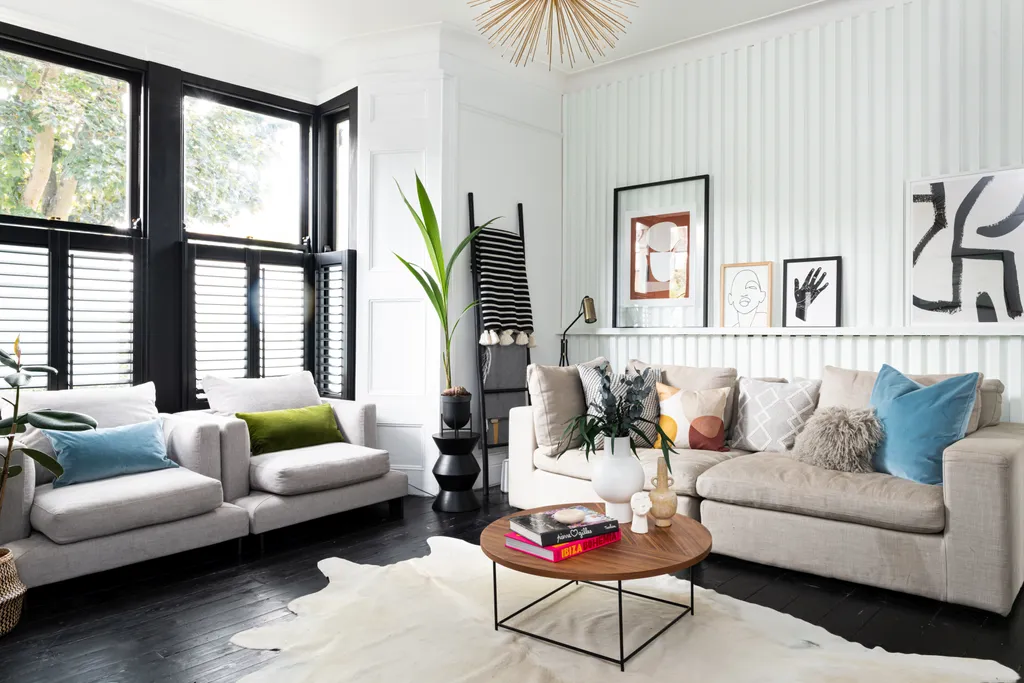
White, cream, beige, soft gray, pale taupe, and other neutral shades reflect natural light and create an open feeling. Dark colors can still work, but using them across every wall may make the room feel visually smaller.
You don’t have to create an entirely white room, either. Try combining warm white walls with beige furniture, light wood accents, and a few darker accessories.
Want a little personality? Add color through cushions, artwork, rugs, plants, or decorative objects. These small touches can bring energy without overwhelming the room.
2. Use a Compact Sofa
The sofa usually becomes the largest piece of furniture in a living room, so choosing the right one matters.
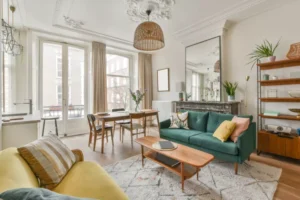
For a small space, consider a compact two- or three-seater sofa instead of a large sectional. A sofa with slim arms and a raised base can also make the floor underneath visible, creating a lighter visual appearance.
If you regularly host guests, a compact sofa bed can serve two purposes without taking up additional floor space.
Another clever option is an apartment-sized modular sofa. You can rearrange the pieces depending on how you use the room.
The goal isn’t simply to buy the smallest sofa available. Instead, choose a sofa that fits the room comfortably while leaving enough space to move around.
3. Make the Walls Work Harder
When floor space is limited, look upward.
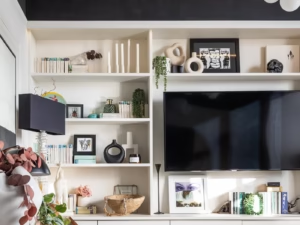
Your walls can provide valuable storage and decoration without consuming precious floor area. Floating shelves are particularly useful because they provide space for books, plants, artwork, and decorative accessories.
Wall-mounted cabinets can also replace bulky floor-standing storage units.
For a modern appearance, keep the shelves relatively uncluttered. A few carefully selected objects often look better than filling every available inch.
You can think of your walls as a second floor—but without actually taking up floor space.
4. Pick Multi-Functional Furniture
Small living rooms benefit enormously from furniture that performs more than one job.
For example, an ottoman can work as a footrest, extra seating, and storage. A coffee table with drawers can hide remotes, books, blankets, and other everyday items.
Nesting tables are another excellent choice. You can spread them out when you need more surface area and tuck them together when you don’t.
A console table behind the sofa can provide storage and a decorative surface while taking up relatively little room.
When shopping for furniture, ask yourself: Can this piece do two jobs?
If the answer is yes, it deserves serious consideration.
5. Try a Round Coffee Table
A rectangular coffee table may look attractive, but sharp corners can make a compact living room feel more restricted.
A round or oval coffee table can improve the flow of the room because there are fewer hard corners to navigate around.
Glass or acrylic tables can go one step further. Since they visually disappear into the room, they can make the floor feel more open.
If you have young children, rounded furniture can also be a practical choice because it reduces sharp edges.
6. Use Mirrors to Create Visual Space
Mirrors are a classic interior design trick for a reason: they work.
A large mirror positioned opposite a window can reflect natural light and make the room appear brighter and deeper. Even a collection of smaller mirrors can create an interesting decorative wall.
For a modern look, try a simple frameless mirror or one with a thin black, brass, or wood frame.
However, don’t cover every wall with mirrors. One well-positioned mirror can make a stronger impact than several randomly placed ones.
7. Let Natural Light Take Center Stage
Natural light is one of your best decorating tools—and it doesn’t cost anything.
Avoid blocking windows with large furniture whenever possible. Choose lightweight curtains instead of heavy drapes if privacy allows.
Sheer curtains can soften sunlight while allowing plenty of brightness into the room.
If your living room has limited natural light, use layered artificial lighting. Combine ceiling lights with floor lamps, table lamps, wall lights, or LED accent lighting.
Good lighting can make a small room feel warm rather than confined.
8. Keep the Floor Visible
Here’s a simple design principle: the more floor you can see, the larger the room tends to feel.
Furniture with exposed legs is therefore a smart choice for compact spaces. Instead of a bulky sofa that sits directly on the floor, choose one with a raised base.
The same idea applies to chairs, side tables, and cabinets.
You can also use a properly sized area rug to define the seating zone. Avoid choosing a rug that is too small because it can make the furniture arrangement feel disconnected.
9. Create a Minimalist Entertainment Area
A television wall can easily become the visual center of a living room, but it doesn’t need to dominate the space.
Wall-mounting the TV eliminates the need for a bulky entertainment unit. Below it, you can install a slim floating console for media devices and storage.
Keep cables hidden wherever possible. Visible wires can quickly make a modern room look messy.
For a sophisticated appearance, combine the TV with simple wall paneling, warm wood tones, or subtle textured finishes.
The trick is to create a functional entertainment zone without turning it into a wall of electronics.
10. Add Greenery Without Creating Clutter
Plants can make a small living room feel fresh and alive.
However, you don’t need a jungle in your apartment. One tall indoor plant in an empty corner can create a strong visual statement. Smaller plants can sit on shelves or side tables.
If you’re short on floor space, hanging planters are another option.
Choose plants based on the amount of natural light your room receives. A healthy plant always looks better than a struggling one.
11. Use One Statement Wall
A small living room doesn’t necessarily need plain walls everywhere.
Instead of decorating every wall, choose one area as a focal point. This could be a textured wall, a subtle wallpaper pattern, a gallery wall, or a painted accent wall.
The key is restraint.
For example, a warm beige room with one muted green or charcoal accent wall can create depth without making the space feel visually chaotic.
A statement wall works like punctuation in a sentence—it adds emphasis without taking over the entire conversation.
12. Keep Clutter Under Control
Even the most beautiful small living room can feel uncomfortable when it’s overloaded with stuff.
Use baskets, storage ottomans, floating cabinets, and closed shelving to keep everyday items organized.
Before adding a new decoration, ask whether it actually improves the room.
You don’t need dozens of accessories to create a stylish interior. Sometimes three carefully selected pieces can have more impact than twenty random objects.
Try to keep surfaces such as the coffee table and TV console relatively clear. Your eyes need places to rest.
Conclusion
Creating a beautiful small living room is less about having more space and more about using the space you already have intelligently. Light colors, compact furniture, multifunctional pieces, mirrors, smart storage, natural light, and carefully chosen décor can dramatically change the way your room looks and feels.
Remember, modern design doesn’t mean making everything cold or minimal. Your living room should still feel like a place where you can relax, watch a movie, read a book, or spend time with family.
So don’t see a small living room as a limitation. See it as a design opportunity. With a little creativity and thoughtful planning, even a compact room can become stylish, functional, and wonderfully comfortable.